Advantages of using biometric deduplication

In today’s highly informational age, data duplication is quite widespread. When dealing with your personal information, it might not create a huge issue. However, data duplication can be a nightmare when it comes to biometrics. When dealing with an automated biometric matching engine, biometric deduplication is used to eliminate multiple entries and keep the database unique
What is biometric deduplication?
The process of giving each user in a database a distinct identity by biometric means is called “biometric de-duplication.” The system may have saved the same person under several different IDs. To prevent the same user from enrolling more than once using different forms of identification, duplicate records must be removed from the database.
In addition, it verifies enrollment by comparing the biometric data a user inputs against a database of stored biometric data at a ratio of 1:N, making the enrollment process both visible and efficient. Using data deduplication guarantees that each piece of information is stored only once, regardless of the technique used. With this technology, one of the most notable features is the high degree of precision it provides. File, block, and even byte levels are all accessible for de-duplication.
Biometric duplication can occur during taking data-related actions. This action includes transferring, migrating, backing up, editing, etc., especially when working with large amounts of data. If there is an issue during enrollment, duplicate biometric information may be stored. Biometric data is gathered from many sites and then uploaded to a central database as part of large-scale biometric data collection efforts like biometric voter ID, biometric country ID campaigns, etc.
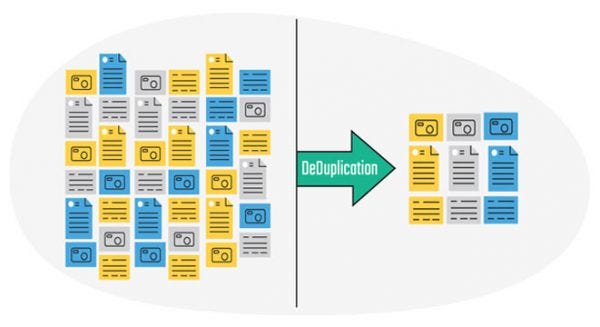
What is the process of biometric deduplication?
The standard procedure for biometric providers involves loading the full biometric database onto computer servers and then searching each record against the entire database, a process that requires as many searches as there are entries in the database.
Deduplication with conventional biometric software, on the other hand, necessitates 10 million one-to-many searches if the database has 10 million records. Performing the deduplication would take over six months if each biometric search took just one second. Traditional deduplication software providers, aware of this problem, typically employ many servers to boost processing power and decrease the completion time.
Thankfully, M2SYS developed a method to deal with the problem. The complete biometric database is loaded onto a single server, where Hyper-Deduplicator software performs a filtering phase similar to an industrial separation process, removing all duplicates in a matter of hours. There is no need for one-to-many (1:N) biometric searches when using the Hyper-Deduplicator software developed by M2SYS. Learn more: https://www.m2sys.com/blog/biometric-software/advantages-of-biometric-deduplication-software/

Comments
Post a Comment